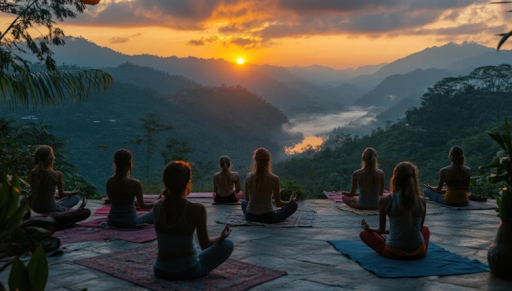

Rishikesh is called the yoga capital of the world for five specific reasons:
|
The title was not self-appointed. It was earned through a specific sequence of events: a founding institution, a global festival, a famous visit, and a legal environment that no other city has replicated. Most articles about Rishikesh describe the scenery. This one answers the actual question: what specific things make this city the yoga capital, and not Mysore, or Pune, or Bali, or anywhere else.
The International Yoga Festival: The Event That Made It Official
The International Yoga Festival has been held every March in Rishikesh since 1999. It runs for seven days at Parmarth Niketan Ashram on the Ganges, draws participants from over 100 countries, and is organised with support from the Uttarakhand government and the Ministry of AYUSH. In 2025, it completed its 26th edition.
This is the event most directly responsible for the yoga capital title. Not the geography, not the spiritual heritage, not the famous visitors. A festival that has run every single year for over two decades and grown into the largest yoga gathering in the world.
Mysore and Pune are serious yoga cities with their own strong lineages. Neither has built anything equivalent to this. The IYF is what Rishikesh has that no other city does.
Where Modern Yoga Teacher Training Began: Rishikesh, 1936
Swami Sivananda was a doctor before he became a monk. He founded the Divine Life Society in Rishikesh in 1936, and the curriculum he created reflected his medical background. Asana, pranayama, meditation, philosophy, and anatomy are taught together as one programme, not separately. That is the same framework every yoga teacher training in the world follows today.
His students took that model global. Swami Vishnu-devananda, one of his most prominent students, went on to found the Sivananda Yoga Vedanta Centres and trained thousands of teachers across Europe and North America. The export started from Rishikesh.
The Divine Life Society is still operating on the banks of the Ganges. It is not a museum or a heritage site. It is a functioning institution that has been running continuously since 1936, which is longer than Yoga Alliance has existed, longer than most yoga schools in the Western world have existed, and longer than yoga as a global industry has existed.
When people ask why Rishikesh and not somewhere else, this is part of the answer. The administrative and educational structure of modern yoga was built here and spread outward from here. That is not atmosphere or reputation. It is a historical fact.
The Beatles, 1968, and How Rishikesh Reached the Western World
In February 1968 the Beatles arrived at Maharishi Mahesh Yogi’s ashram in Rishikesh. During their stay, John Lennon and Paul McCartney wrote more than 30 songs, including most of what became The White Album. Dear Prudence, Back in the USSR, While My Guitar Gently Weeps, Ob-La-Di Ob-La-Da, all written in Rishikesh.
Mia Farrow was there. So were Donovan and Mike Love. But it was the Beatles that made the difference in how the West understood Rishikesh. A generation of people who had never thought about India or yoga became curious about the place where that music was written.
One thing worth being clear about: the Maharishi taught transcendental meditation, not the Hatha or Ashtanga yoga that Rishikesh schools teach. The practices are different. But what the visit did was create a Western appetite for Indian spiritual practice that yoga schools in Rishikesh have met ever since. The ashram itself, known today as the Beatles Ashram, has been open to visitors since 2015.
Rishikesh vs Mysore vs Pune: What Each City Is Actually Best For
Calling Rishikesh the yoga capital does not mean Mysore or Pune are lesser destinations. Mysore is where serious Ashtanga students go. The KPJAYI lineage is there, and the teachers who trained directly under K. Pattabhi Jois are still based there. Pune is where BKS Iyengar taught for decades and the Iyengar Institute is still running. Both are worth knowing about honestly.
What Rishikesh offers that neither does is range. Over 200 Yoga Alliance-registered schools, multiple styles taught at every level, a festival that has run since 1999, and a city that is vegetarian and alcohol-free by law. For anyone not specifically looking for Ashtanga or Iyengar, Rishikesh covers more ground than either.
| Rishikesh | Mysore | Pune | |
|---|---|---|---|
| Best for | Multi-style, beginners, full immersion | Ashtanga specifically | Iyengar specifically |
| Yoga Alliance schools | 200+ | Fewer | Fewer |
| 200H TTC cost | $900-$1,500 | $1,500-$2,500 | $1,500-$2,500 |
| Annual festival | IYF since 1999 | No equivalent | No equivalent |
| City environment | Vegetarian and alcohol-free by law | University city | Cultural capital |
Tapovan: The Part of Rishikesh Where the Practice Is Most Concentrated
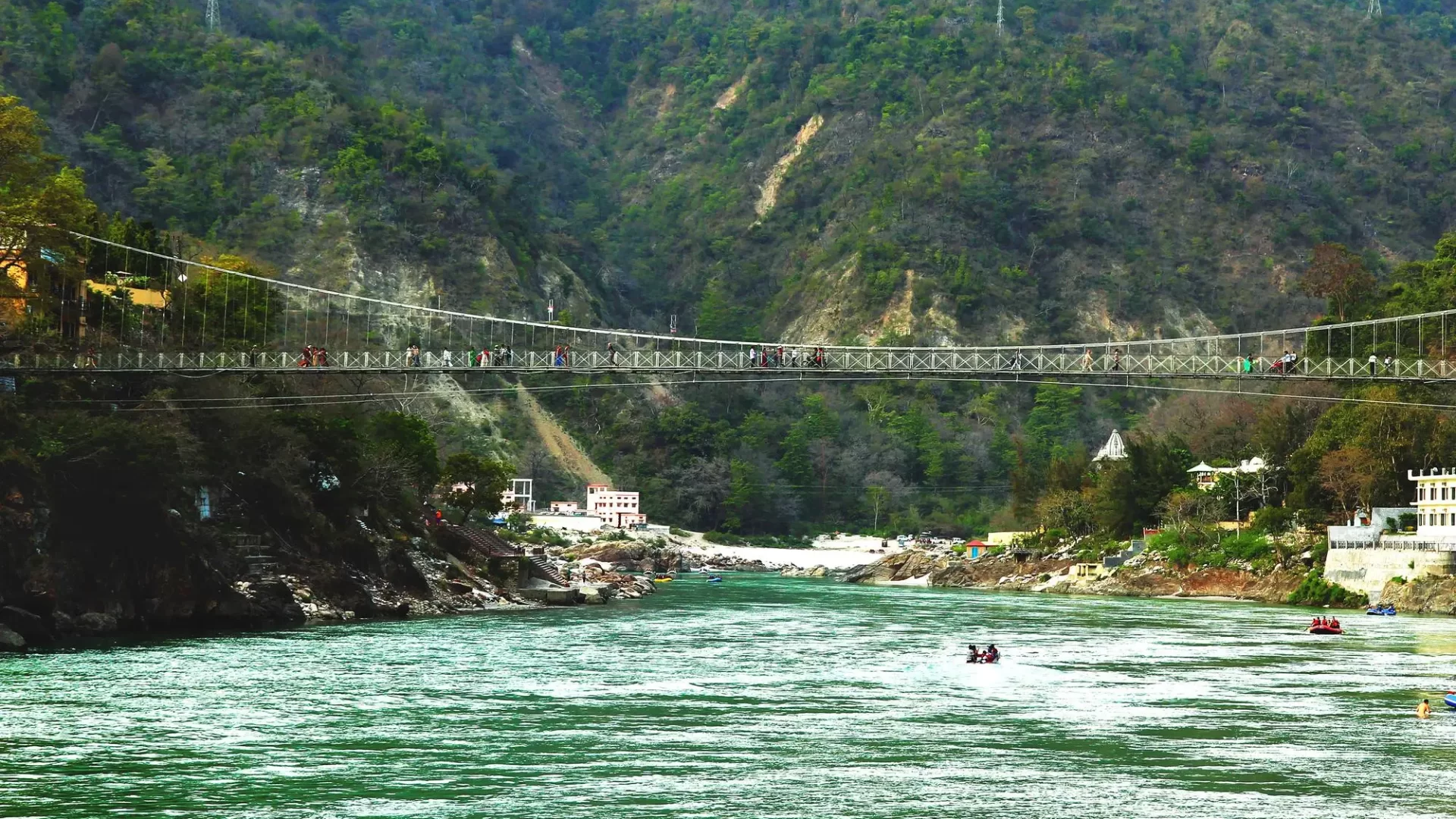
Most people arriving in Rishikesh for the first time head toward Laxman Jhula or Ram Jhula. Both are busy, both are full of shops, cafes, and tourists. That part of Rishikesh is fine for a visit, but it is not where the serious yoga schools are based.
Tapovan sits above the main town on the western bank of the Ganges. It is quieter, the roads are narrower, and the mornings sound different. Bells from the nearby temples, the river, birds. The kind of early morning that makes a 6:00 am start feel less difficult than it would anywhere else.
Sadhus and traditional teachers have lived in Tapovan for generations, long before yoga became an industry. The elevation and the distance from the market area is part of why. Schools that are based here operate in a different environment from those in the lower town and students who train in Tapovan notice the difference in how complete the immersion feels.
Yog School India is based on the Main Tapovan Road, in front of Aryan Resort. That location is not incidental. It is the reason the training feels the way it does.
The Only Major Yoga Destination That Is Vegetarian by Law
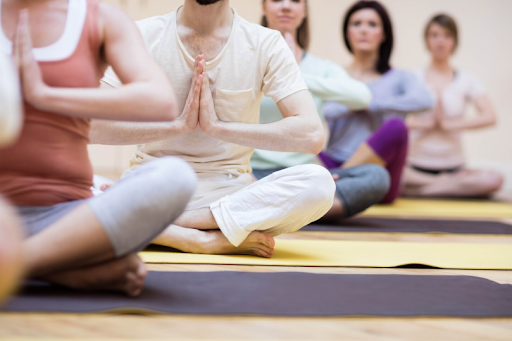
Rishikesh is one of the few cities in India where meat and alcohol are banned by law, not by cultural convention but by civic regulation. Every restaurant in the city serves vegetarian food. There are no bars.
For a yoga student, this matters more than it might sound. The yogic principle of sattva is about purity in diet, thought, and environment together. Ahimsa, non-harm, is one of the 8 limbs of yoga. The vegetarian law reflects both of these directly. The city is not just a place where yoga schools happen to be located. The environment itself is built around the same principles the practice is built around.
No other major yoga destination has this. Bali does not. Mysore does not. Goa does not. In every other city, a yoga student has to make a conscious choice to eat and live in a way that supports their practice. In Rishikesh, that choice is already made.
Taking Your Pranayama Practice Further
Rishikesh is one of the few cities in India where meat and alcohol are banned by law, not by cultural convention but by civic regulation. Every restaurant in the city serves vegetarian food. There are no bars.
For a yoga student, this matters more than it might sound. The yogic principle of sattva is about purity in diet, thought, and environment together. Ahimsa, non-harm, is one of the 8 limbs of yoga. The vegetarian law reflects both of these directly. The city is not just a place where yoga schools happen to be located. The environment itself is built around the same principles the practice is built around.
No other major yoga destination has this. Bali does not. Mysore does not. Goa does not. In every other city, a yoga student has to make a conscious choice to eat and live in a way that supports their practice. In Rishikesh, that choice is already made.
What It Actually Looks Like to Study Yoga in Rishikesh
Not everyone who comes to Rishikesh is looking for a teacher training. There are three realistic ways to engage with the city depending on what you are looking for.
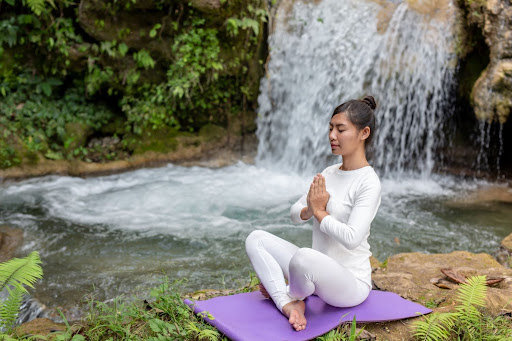
A short visit of one or two weeks gives you access to beginner classes, morning pranayama by the river, and Ganga Aarti at Parmarth Niketan every evening. You do not need a TTC to understand what makes this city different from other places. A week here does that on its own.
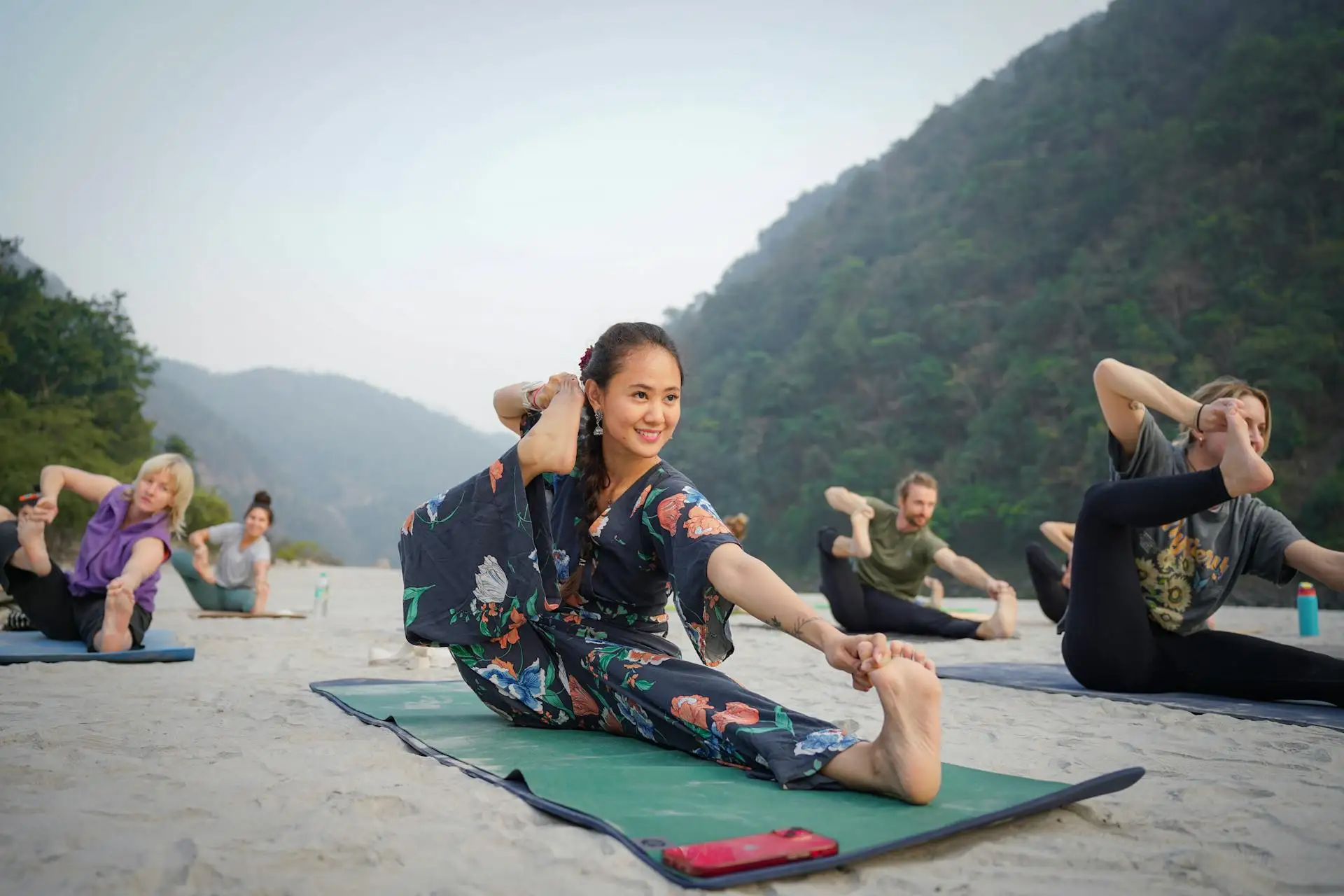
The 200-hour teacher training in Rishikesh is 28 days. The schedule is long, starting at 6:00 am and running until around 9:00 pm, and the first week catches most people off guard, regardless of how much yoga they have done before. By week four the same people are usually not ready to leave. You finish with an RYT-200 and a practice that has been looked at and corrected every single day for a month.
Some people come to Rishikesh without wanting a certification. A yoga and meditation retreat in Rishikesh runs for 7 to 14 days and covers yoga, meditation, and Ayurveda. Less structured than a TTC but the city, the teachers, and the setting are the same.
If you are unsure whether 200 hours is the right level to start at, this breakdown of 200 hour vs 300 hour yoga teacher training covers what each certification means in practice.
Further Readings
FAQs About Rishikesh
No government sat down and declared it. The title came from the International Yoga Festival running every March since 1999 and not stopping. Twenty six years of that, plus over 200 registered schools in one city, and the title became difficult to argue with.
For Ashtanga, Mysore. The Jois lineage is there and that matters if Ashtanga is specifically what you are after. For most other things, Rishikesh has more schools, more styles, and a more complete setup for someone who is just starting out.
February to April and September to November. Cool weather, the festival is in March, and the river is at its best. July and August are monsoon, and most people skip those months.
No. Most schools here including Yog School India take complete beginners. A little familiarity with basic poses is useful but it is not something anyone checks at the door.
It is one of the calmer places to travel in India. No alcohol, no meat, quieter than most tourist towns, and generally considered safe for solo female travellers.
The Bottom Line
Rishikesh holds the yoga capital title because of what was built here, not just what grew here naturally. Swami Sivananda’s 1936 curriculum created the framework that every yoga teacher training in the world still follows. The International Yoga Festival has run every March since 1999 and has not stopped. More than 200 registered schools operate in one city. The city itself is vegetarian and alcohol-free by law. And within Rishikesh, Tapovan is where the serious schools have always been, long before the yoga industry arrived.
These are institutions, not atmosphere. Atmosphere can be created anywhere. Institutions take generations to build, and Rishikesh has had that time.
We are Yog School India, based in Tapovan on the Main Tapovan Road. We run the 200-hour TTC and beginner programmes every month of the year.