You spend most of your day folding forward. Desk, phone, car, sofa. Your spine knows it even if you do not.
Prone yoga poses are postures performed lying face-down on the mat. That position alone does something most yoga styles skip entirely. It puts your spine into extension, opens the chest, and strengthens the muscles running along your entire back.
Most people have never done a single belly-down asana. Those who practice them regularly notice the difference in their posture, their lower back, and how they carry themselves off the mat.
What Are Prone Yoga Poses (Belly-Down Asanas)?
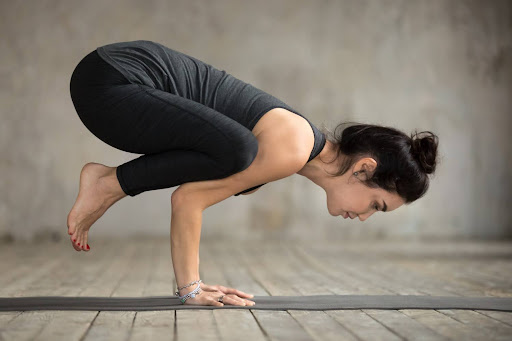
Prone yoga poses are postures performed lying face-down on the mat, primarily used to strengthen the spine, open the chest, and counter the effects of prolonged sitting.
Prone means belly on the floor, torso facing down. Most poses in this category are backbends. Your spine extends, chest opens, shoulders pull back. Everything that a desk job compresses, these poses work to reverse.
Three areas carry most of the load: the posterior chain along your spine and lower back, the core stabilising the pelvis, and the chest and lungs opening as the shoulders draw back.
If you are new to floor-based work, it helps to understand where prone poses sit alongside sitting yoga postures, both categories build foundation strength before you ever stand up.
Prone Poses in the Hatha Yoga Pradipika
Bhujangasana, Shalabhasana, and Dhanurasana appear in the Hatha Yoga Pradipika, a 15th century Sanskrit text that forms the basis of traditional yoga teaching in Rishikesh today. They were prescribed for spinal health, digestion, and energetic activation, not for how they look.
If you have ever wondered how Hatha compares to Vinyasa as a practice, prone poses are a good illustration, Hatha holds each posture long enough for the spine to actually respond, rather than flowing through it.
Prone Yoga Poses by Difficulty Level
Not all prone poses ask the same thing from your body. This table ranks all 13 from beginner to advanced so you know where to start and where you are headed.
| Pose (English) | Sanskrit Name | Level |
|---|---|---|
| Crocodile Pose | Makarasana | Beginner |
| Sphinx Pose | Salamba Bhujangasana | Beginner |
| Half Locust Pose | Ardha Shalabhasana | Beginner |
| Eight-Limbed Pose | Ashtangasana | Beginner |
| Cobra Pose | Bhujangasana | Beginner–Intermediate |
| Locust Pose | Shalabhasana | Intermediate |
| Upward Facing Dog | Urdhva Mukha Svanasana | Intermediate |
| Half Bow Pose | Ardha Dhanurasana | Intermediate |
| Four-Limbed Staff | Chaturanga Dandasana | Intermediate |
| Snake Pose | Sarpasana | Intermediate |
| Downward Facing Frog | Adho Mukha Mandukasana | Intermediate |
| Bow Pose | Dhanurasana | Intermediate–Advanced |
| Side Bow Pose | Parsva Dhanurasana | Advanced |
Start where your body is, not where you want it to be. Sphinx and Crocodile are the right entry point for most people. Work there until they feel easy before moving on.
7 Key Prone Yoga Poses: Step-by-Step Instructions
1. Sphinx Pose (Salamba Bhujangasana) Level: Beginner
The gentlest entry into backbends. Forearms on the floor, spine extends without compression.
- Lie face down, legs hip-width apart, tops of feet pressing into the mat.
- Elbows under the shoulders, forearms flat and parallel.
- Press the forearms down, lift the chest, pubic bone stays on the mat.
- Shoulder blades draw together, neck stays long.
- Do not crunch the lower back. The lift comes from the chest, not the waist.
Inhale to lift. Exhale, shoulders drop away from ears.
Decompresses the lumbar spine. Good for anyone with desk-related stiffness.
2. Cobra Pose (Bhujangasana) Level: Beginner to Intermediate
Hands replace forearms. More lift, more spinal work.
- Hands under shoulders, elbows in close to the ribs.
- Tops of feet and pubic bone press firmly down.
- Inhale, lift the chest. Arms straighten only as far as the back allows without the pelvis coming up.
- Slight bend in the elbows. Do not lock them.
- Shoulders roll back. Eyes forward or slightly up, never down.
Inhale on the way up. Exhale, chest opens wider in the hold.
Strengthens the full length of the spine. Stretches the chest and front of the abdomen.
3. Half Locust Pose (Ardha Shalabhasana) Level: Beginner
One leg at a time. Harder than it looks. Do not skip this in favour of the full version.
- Face down, arms alongside the body, chin on the mat.
- Both hip bones stay pressing into the floor throughout.
- Inhale, lift one leg. Straight leg, drive through the heel.
- The hip of the lifted leg does not rise. Keep it level.
- Five breaths, lower slowly, switch sides.
Inhale to lift. Steady breath throughout.
Builds lower back and glute strength one side at a time before the full pose asks for both.
4. Locust Pose (Shalabhasana) Level: Intermediate
Both legs together. One of the most effective poses in Hatha yoga for the posterior chain.
- Face down, arms alongside the body, forehead or chin resting down.
- Inner thighs draw toward each other without touching.
- Inhale, both legs lift at once. Keep them straight.
- Add the chest and arms if the lower back is ready for it.
- Five to eight breaths. Lower with control, do not drop.
Inhale to lift. Exhale without letting the legs fall.
Lower back, glutes, hamstrings. All working at once.
5. Upward Facing Dog (Urdhva Mukha Svanasana) Level: Intermediate
Not Cobra. The thighs leave the floor entirely here. That distinction matters.
- Hands under shoulders, legs hip-width apart.
- Press through the palms and the tops of the feet equally.
- Inhale, arms straighten fully. Chest, hips, and thighs all lift off the mat.
- Shoulders roll back. Chest opens toward the ceiling.
- Legs stay active, thighs lifted, neck neutral throughout.
Inhale to press up. Exhale, hold and open.
Builds arm and wrist strength. Creates thoracic extension that most people never access.
6. Half Bow Pose (Ardha Dhanurasana) Level: Intermediate
One hand, one ankle. Where your shoulder and hip flexibility actually shows up.
- Bend the right knee, heel moves toward the glute.
- Right hand reaches back, holds the ankle or foot.
- Inhale, kick the foot into the hand. Chest lifts off the mat.
- Left arm alongside the body or extended forward for balance.
- Five breaths. Switch sides. Compare left to right honestly.
Inhale to kick and lift. Exhale, chest opens further.
Hip flexors and shoulders open simultaneously. Prepares the body for full Bow without overwhelming it.
7. Bow Pose (Dhanurasana) Level: Intermediate to Advanced
Both ankles at once. The body balances entirely on the abdomen.
- Bend both knees, heels move toward the glutes.
- Both hands reach back and hold the ankles firmly.
- Inhale, kick both feet into the hands. Chest and thighs lift together.
- Knees stay hip-width apart. Do not let them splay.
- Look forward. With each breath the body rocks slightly. That is normal.
Inhale to lift higher. Exhale without the chest collapsing.
Full spinal extension. Chest and hip flexors open deeply. Digestive organs get a firm compression and release.
Benefits of Prone Yoga Poses
Physical Benefits
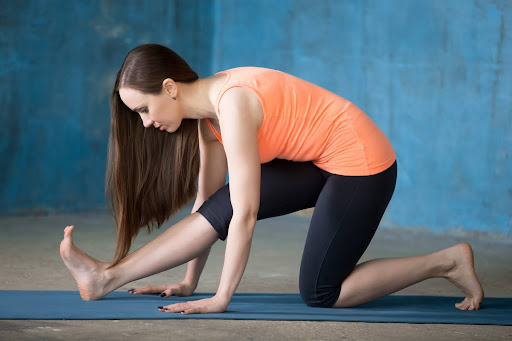
Most people’s posterior chain, the muscles along the spine, lower back, and glutes, barely gets worked in a standard yoga class. Prone poses change that. Regular practice builds real lower back strength, corrects spinal alignment, and chips away at the chronic stiffness that desk work creates over years.
The chest opening is equally underrated. Rounded shoulders and a compressed ribcage are so common they start feeling normal. Backbends undo that gradually. A 2017 study in the Annals of Internal Medicine found yoga as effective as physical therapy for chronic lower back pain, and prone backbends are central to that kind of therapeutic work.
Mental and Energetic Benefits
Face down on the mat, body in contact with the floor, the nervous system settles in a way standing poses rarely produce. In the Hatha tradition, chest-opening backbends are connected to Anahata, the heart centre. The result is practical regardless of the framework: deeper breath, less tension, clearer head.
A dedicated yoga and meditation retreat is often where practitioners first experience how the combination of backbends and breathwork together genuinely shifts stress patterns, not just in a session, but across days.
How to Sequence Prone Poses in a Yoga Class
Prone poses belong in the middle of a sequence. The body needs to be warm before the spine goes into extension, and it needs a forward bend or twist afterward to come back down.
Who goes before and after:
- Warm up first with Cat-Cow, Child’s Pose, or Sun Salutations
- Move into prone poses after the body is fully warm
- Follow with a forward bend like Child’s Pose or Seated Forward Fold
- Never jump straight into Bow or Locust from cold
A simple three-pose progression:
- Sphinx, gentle extension, forearms down, spine warms up
- Cobra, hands down, more lift, back extensors work harder
- Bow, full extension, both ankles held, the body earns it by this point
For anyone training to teach, sequencing logic is one of the first things a good 200-hour yoga program covers.
Safety Tips & Contraindications
Who should avoid or modify prone poses:
- Pregnant women should skip all belly-down poses entirely
- Herniated or bulging disc, consult a doctor before attempting any backbend
- Recent abdominal surgery, wait until fully cleared by a medical professional
- Severe lower back injury, start with Crocodile only and work under a qualified teacher
5 rules before you begin:
- Always warm up first. Cold spine, no backbends.
- Engage the glutes and core before lifting. Do not just hang in the lower back.
- Use a folded blanket under the hips if the pelvis feels uncomfortable on the mat.
- Never jerk into a pose. The lift should be slow and controlled on an inhale.
- Rest in Child’s Pose between poses. The back needs recovery time between extensions.
If you are practicing in Rishikesh under a qualified teacher, declare any injuries before the first class. A good teacher will modify the sequence around you, not push through it. In addition, if you’re a female traveller and wonder is Rishikesh safe for solo female travellers?, then you should know that the place is quite safe. All you have to do is to be attentive and have basic safety tips before your visit.
Also on the Blog
FAQ: Prone Yoga Poses
Postures performed face-down on the mat. Most are backbends. They strengthen the spine, open the chest, and reverse what sitting does to your body over time.
Sphinx. Forearms stay on the floor, the spine extends gently, and there is no flexibility requirement to get started. Most people manage it on their first attempt.
For most people, yes. Prone backbends strengthen the muscles that support the spine directly. A 2017 study in the Annals of Internal Medicine found yoga as effective as physical therapy for chronic lower back pain. Start with Sphinx and Cobra. Do not jump straight to Bow.
Fifteen seconds if you are just starting. Up to sixty as the body adapts. Locust and Bow are harder to sustain, so shorter holds with good form beat longer holds with sloppy ones every time.
Pregnant women, anyone with a herniated disc, recent abdominal surgery, or a serious lower back injury. When in doubt, check with a doctor before getting on the mat.
Prone is face down. Supine is face up. Both are floor-based but they work opposite sides of the body entirely.
Conclusion
Prone yoga poses are not complicated. They are just underused.
Most people spend their days folding forward. Prone backbends are the direct answer to that. Start with Sphinx or Crocodile, stay there until it feels easy, then build from there. The spine responds faster than most people expect when the work is consistent.
At Yog School India, prone poses and backbend sequencing are part of our daily practice in Rishikesh. If you’re planning your trip, check our guide on the best time to visit Rishikesh for yoga to choose the ideal season for your practice. Whether you are joining a beginner class or a 200-hour yoga teacher training, you will learn these poses the way they were meant to be taught.
Ready to start? Get in touch and we will help you find the right program.