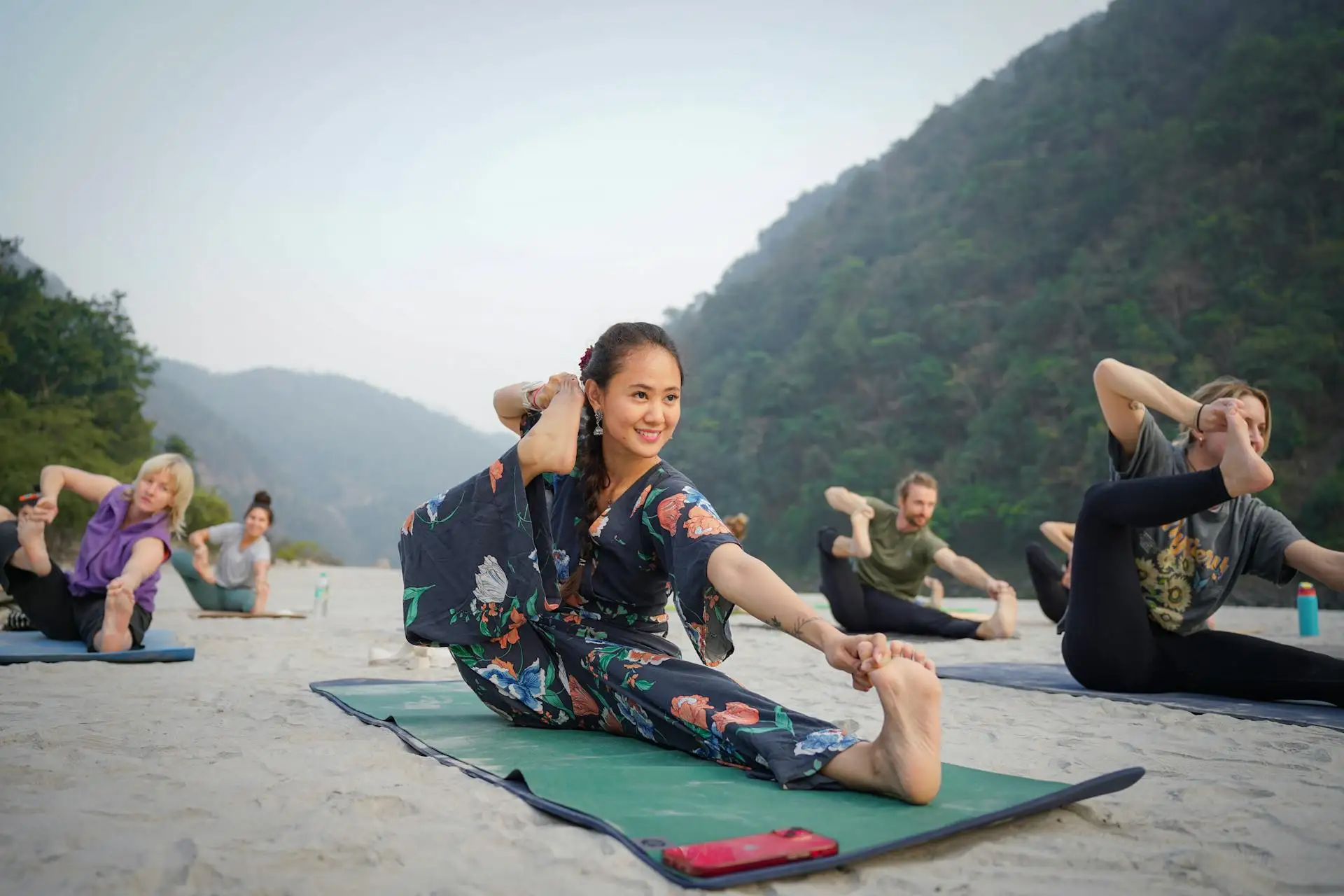
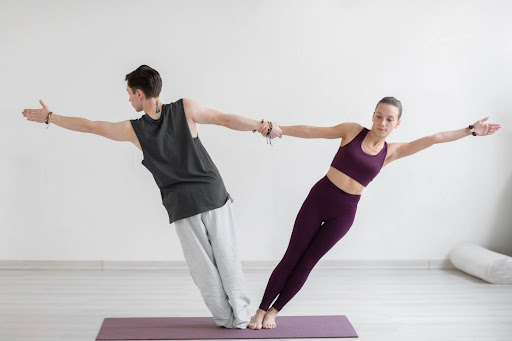

Ashtanga and Vinyasa get mixed up more than any other two yoga styles. Both are physical. Both use breath to drive movement. Both come from the same Indian lineage.
But spend a week practicing each and you will understand why they are not interchangeable. The structure is different. The demands are different. What they do to your body and mind over time is different.
Knowing the difference matters, whether you are picking a class, planning a retreat, or considering a yoga teacher training in Rishikesh.
What Is Ashtanga Yoga?
Ashtanga is one of the most structured yoga styles in existence. There is no improvisation. No themed classes. No surprises.
Origins and Philosophy
K. Pattabhi Jois developed Ashtanga yoga in Mysore, India, drawing directly from Patanjali's eight-limbed path, known in Sanskrit as Ashtanga, meaning eight limbs. The practice was never designed to be just physical. It was a complete system for living, with postures as one part of something much larger.
Mysore remains the home of traditional Ashtanga training. Serious practitioners still travel there to learn from Jois's lineage holders.
How an Ashtanga Class Works
The sequence is fixed. Same poses, same order, every time you practice. New poses come only after the previous ones are solid. That is not arbitrary. Ashtanga is built on the idea that mastery of one pose prepares the body for the next.
Three things anchor the practice throughout: Ujjayi breath, a slow controlled breathing technique that creates an audible ocean-like sound, precise posture, and drishti, a fixed gaze point. In Ashtanga, these three are inseparable. The class itself is typically silent, minimal verbal instruction, strong physical adjustments from the teacher.
What Is Vinyasa Yoga?
Vinyasa is the most widely taught yoga style in studios today. A lot of people think it just means fast yoga. It is more than that.
Origins and Philosophy
Vinyasa comes from Krishnamacharya’s idea that breath and movement should never be separated. The word itself means to place in a special way. That applies to the transitions as much as the poses. How you move between poses is part of the practice, not a gap in it.
How a Vinyasa Class Works
No two Vinyasa classes are the same. The teacher builds the sequence, sometimes around a theme, sometimes around a peak pose, sometimes around what the group needs that day.
Music is common. Props are encouraged. Modifications are offered without question. The pace can range from a slow deliberate flow to something close to power training.
That range is actually what makes Vinyasa work for so many people. A complete beginner and an experienced practitioner can be in the same room and both walk out having worked at the right level.
Ashtanga vs Vinyasa: Key Differences
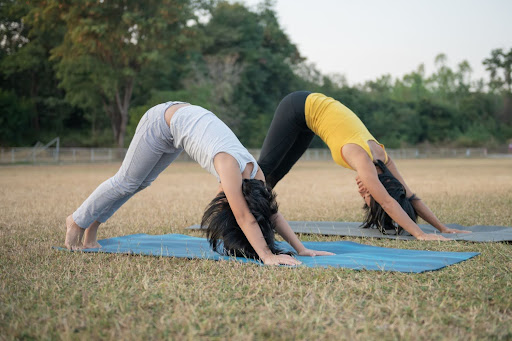
| Aspect | Ashtanga Yoga | Vinyasa Yoga |
|---|---|---|
| Sequence | Fixed, same every class | Creative, varies each class |
| Pace | Fast, 5 breaths per pose | Varies, slow to power |
| Instruction style | Mysore self-led or teacher-led | Teacher-led with verbal cues |
| Music | Typically none | Often includes music |
| Props | Rarely used | Commonly used |
| Modifications | Limited, progression-based | Freely offered |
| Best for | Discipline, mastery, routine | Variety, creativity, beginners |
1. Structure and Sequence
Ashtanga has six series. You start at the beginning of the Primary Series and work through it in order. Every session. The sequence does not change because you are tired or bored or want something different. Vinyasa has no such structure. The teacher decides what the class looks like that day.
2. Pace and Intensity
Ashtanga moves at a set rhythm, five breaths per pose, consistent throughout. Vinyasa depends entirely on the class type. A yin-influenced flow is unhurried. A power Vinyasa class will push you as hard as Ashtanga does.
3. Role of the Teacher
In a Mysore-style Ashtanga class, the teacher moves through the room making physical adjustments. They rarely speak. In Vinyasa, the teacher leads verbally, calling out poses, offering cues, demonstrating transitions.
4. Breath Technique
Both styles use Ujjayi breath, the slow controlled breath that creates a soft sound at the back of the throat. Ashtanga prescribes exactly how many breaths each pose receives. Vinyasa uses the same breath but with more flexibility around timing.
5. Use of Music and Props
An Ashtanga room is silent. Props like blocks and straps rarely appear. Vinyasa is the opposite. Music is standard in most studios and props are part of how teachers make poses accessible.
6. Progression and Mastery
In Ashtanga, the teacher decides when you are ready for the next pose. You do not self-promote. That structure frustrates some people and suits others perfectly. Vinyasa lets you explore any pose at any stage, with modifications available throughout.
7. Spiritual Depth
Ashtanga is rooted in the eight-limbed path of Patanjali. The physical practice is one piece of a larger system that includes ethics, breathwork, and meditation. Vinyasa leans more toward moving meditation, present-moment awareness without the same prescribed framework around it.
Benefits of Each Style
What does Ashtanga do for your body over time?
The fixed sequence is what makes Ashtanga uniquely effective. Your body encounters the same demands repeatedly, and over months, it adapts in ways that varied practice cannot replicate. Strength and flexibility develop in parallel because the series requires both at the same time. Progress is also measurable, moving through the Primary Series gives you a clear marker that most yoga styles simply do not offer.
What does Vinyasa do that Ashtanga does not?
Staying in a pose for a full minute is different from passing through it. Your muscles and connective tissue actually get time to let go. Do that consistently and your hips open up, your hamstrings lengthen, your spine moves more freely. Better posture tends to follow on its own.
Which Style Is Right for You?
Both styles work. The right one depends on what you actually need right now.
Choose Ashtanga If...
You do well with routine. Ashtanga takes decision fatigue out of the equation completely. Same sequence, same room, same breath. Some people find that repetitive. Others find it the only way they actually stay consistent.
It also suits anyone who wants visible progress. The series structure gives you something to work toward. That clarity is rare in yoga.
Choose Vinyasa If...
Doing the same thing every session sounds like your idea of a nightmare. Vinyasa is built for people who need variety to stay engaged. The classes change, the teachers sequence differently, and there is always room to modify without the whole thing falling apart around you.
Coming back after a break? Vinyasa. New to yoga altogether? Also Vinyasa.
Why Many Yogis Practice Both
Ashtanga gives you discipline. Vinyasa gives you range. People who train in both find they stop thinking of them as separate practices and start seeing them as two sides of the same thing. If teaching is where you are headed, knowing both is not optional. It is the difference between being a good teacher and a versatile one.
Ashtanga vs Vinyasa for Beginners
Vinyasa is the easier starting point. Ashtanga is accessible too, but it asks more from you on day one.
Vinyasa for beginners
Modifications are built in. If a pose is not happening, the teacher offers something else and the class moves on. Nobody stops for you, but nobody leaves you behind either. That forgiveness matters when you are still figuring out where your body is in space.
Ashtanga for beginners
Harder to walk into cold, but the repetition works in your favour faster than you would expect. Same sequence every class means the poses stop feeling foreign quickly. A good teacher starts you on Sun Salutations, keeps you there until they are solid, then adds from there.
So where should a beginner start?
Vinyasa first. Get the foundational poses in your body, build some awareness, stop feeling lost every time someone says Chaturanga. Ashtanga will click much faster once that groundwork is done. Beginners who jump into Ashtanga too early do not struggle because it is too hard. They struggle because they do not know the poses well enough to keep up with a silent room.
Where to Learn Ashtanga and Vinyasa in India
If you are serious about either style, India is where the training means something different.
Why Rishikesh
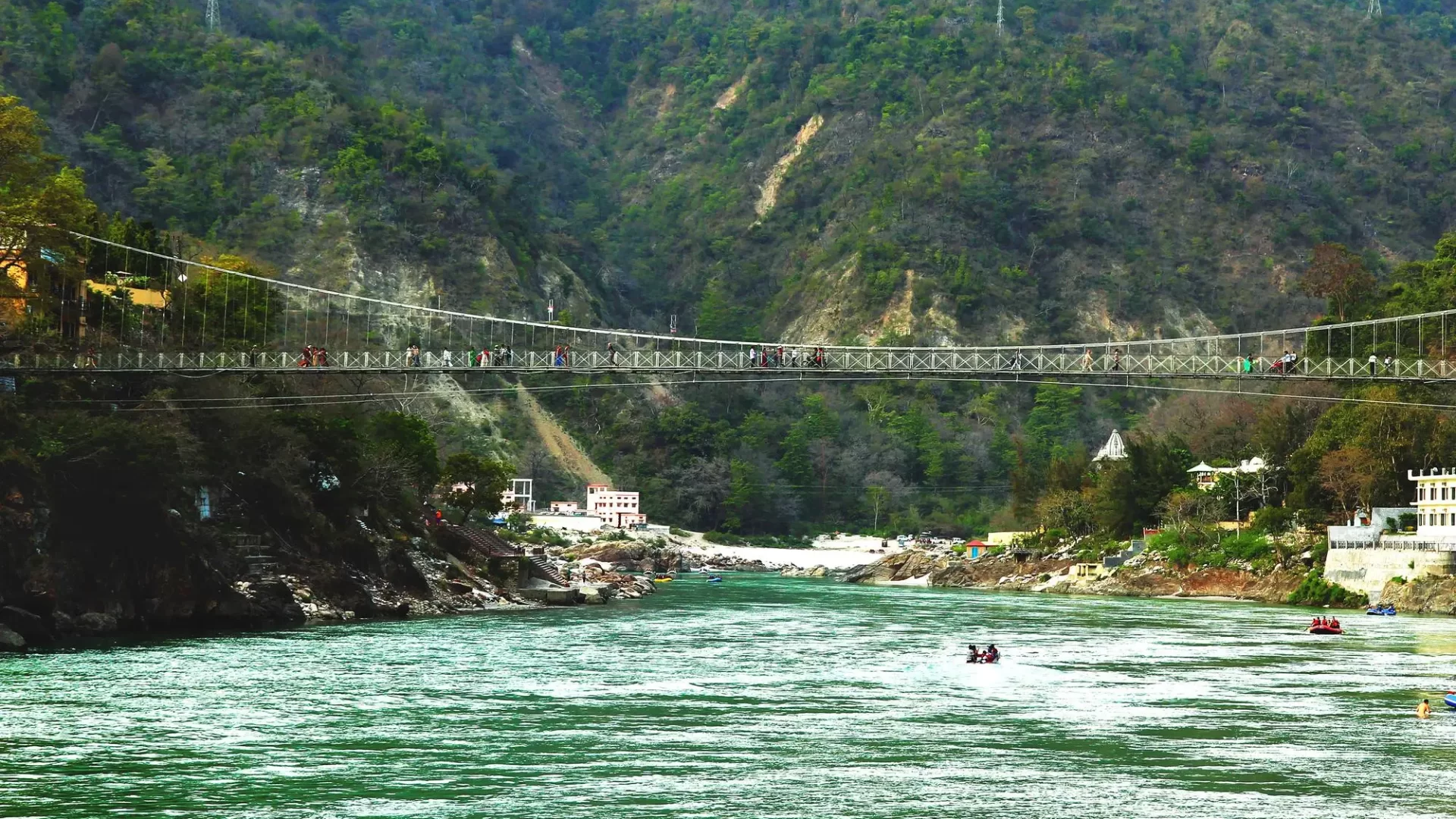
Rishikesh is not just a popular destination for yoga. It is where modern yoga took the shape it has today. The teachers here carry lineages that most studio instructors in the West cannot trace. That context changes what you learn and how you learn it.
What to Look for in a Program
Not every school in Rishikesh teaches both styles properly. Some lean heavily Ashtanga, others barely touch it. Before you book, check the daily schedule. A 200-hour yoga teacher training that covers both gives you something a single-style program cannot, the ability to teach and practice across traditions.
Yoga Alliance certification is the baseline. Without it, your qualification may not hold up internationally.
What You Actually Get
Four weeks of daily Ashtanga and Vinyasa practice, alongside anatomy, philosophy, pranayama, and meditation, does something that years of weekly studio classes do not. You are not fitting yoga around your life. It becomes the whole structure of your day. Most people say that period shifts something that no part-time practice ever reached.
You Might Also Find This Useful
FAQs About Ashtanga & Vinyasa
On most days, yes. Ashtanga is vigorous every single session without exception. Vinyasa depends on the class. A gentle flow is nowhere near as demanding. Power Vinyasa gets close. But an average Ashtanga class asks more of you than an average Vinyasa class.
With a good teacher, yes. You start with Sun Salutations and work through the opening poses of the Primary Series. Nothing gets added until what you have is stable. The repetition helps more than most beginners expect.
Ashtanga burns calories consistently because the intensity does not change session to session. Power Vinyasa matches it. The style matters less than showing up regularly.
Most serious practitioners do. Ashtanga gives you the discipline. Vinyasa gives you range. Neither practice suffers for sharing a weekly schedule with the other.
Both, if the program offers it. A teacher who only knows one style has a ceiling on who they can help. Knowing both removes that ceiling.
Krishnamacharya taught here. Pattabhi Jois trained here. The lineage is not imported. Learning either style in Rishikesh puts you closer to where it actually started.
Conclusion: Start Your Yoga Journey Today
Ashtanga and Vinyasa come from the same lineage. They just take you in different directions. One builds discipline, the other builds range. Most practitioners who stay with yoga long enough find a place for both.
At Yog School India, both styles are part of our 200-hour yoga teacher training in Rishikesh. You practice both daily and leave knowing how to teach them.
Ready to start? Apply for our next batch or get in touch, and we will find the right program for you.