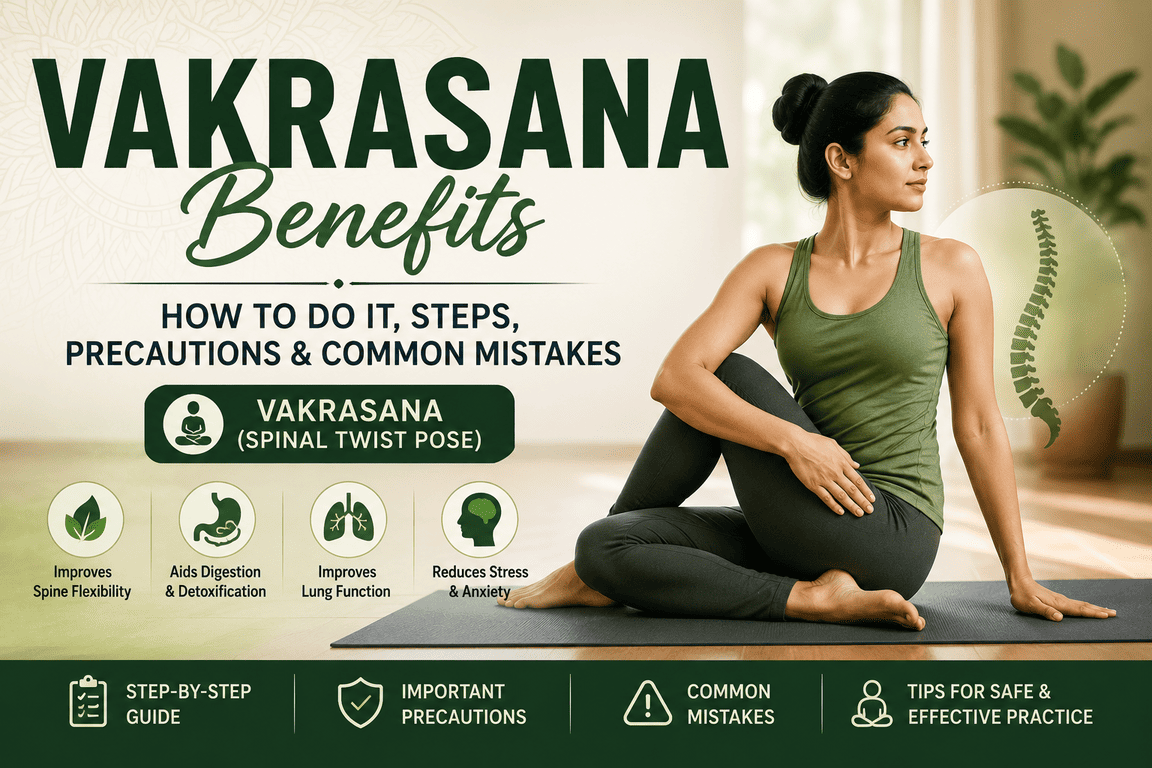

If you've been searching for a simple seated twist that works your spine, digestion, and focus all at once, you've probably come across vakrasana benefits mentioned in almost every beginner yoga guide. And for good reason. This half spinal twist is one of those poses that looks deceptively easy but delivers results that build up week after week, provided you do it right.
In this guide, you'll learn everything from the basic vakrasana procedure, benefits, and contraindications to lesser-known variations like gatyatmak meru vakrasana benefits and supta vakrasana benefits, so you can choose the version that best suits your body and goals.
What Is Vakrasana?
Vakrasana comes from the Sanskrit words "Vakra", meaning twisted or crooked, and "Asana", meaning pose.
It's a seated spinal twist where you rotate your torso while keeping your legs in a specific bent position. Unlike deeper twisting poses, Vakrasana is beginner-friendly, which is exactly why it appears so often in home yoga routines and physiotherapy programs.
If you're just starting your yoga journey, this pose pairs well with the basics covered in how to start Yoga at home, as it requires no equipment and very little space.
Benefits of Vakrasana You'll Actually Notice
The benefits of Vakrasana aren't just theoretical. With regular practice, many people notice improvements within a few weeks.
1. Improves Spinal Flexibility
The gentle twisting action mobilizes every section of the spine, helping reduce stiffness caused by long hours of sitting.
2. Supports Better Digestion
The twist gently compresses your abdominal organs, stimulating digestion and helping relieve bloating and sluggish bowel movements.
3. Helps Tone the Waistline
Vakrasana activates the oblique muscles, which can gradually strengthen and tone the sides of your abdomen.
4. Relieves Lower Back Pain
A controlled spinal twist loosens tight muscles around the lumbar region and helps reduce mild lower back discomfort.
5. Improves Posture
Strengthening the muscles that support your spine naturally encourages better posture and reduces slouching.
6. Reduces Stress
Like many twisting yoga poses, Vakrasana activates the parasympathetic nervous system, helping calm the mind and reduce stress.
7. Improves Lung Capacity
The twist gently opens the rib cage, encouraging deeper breathing and improving respiratory efficiency.
These Vakrasana health benefits make it an excellent addition whether your goal is better physical fitness, improved mobility, or mental relaxation.
Vakrasana Steps and Benefits: How to Do It Correctly
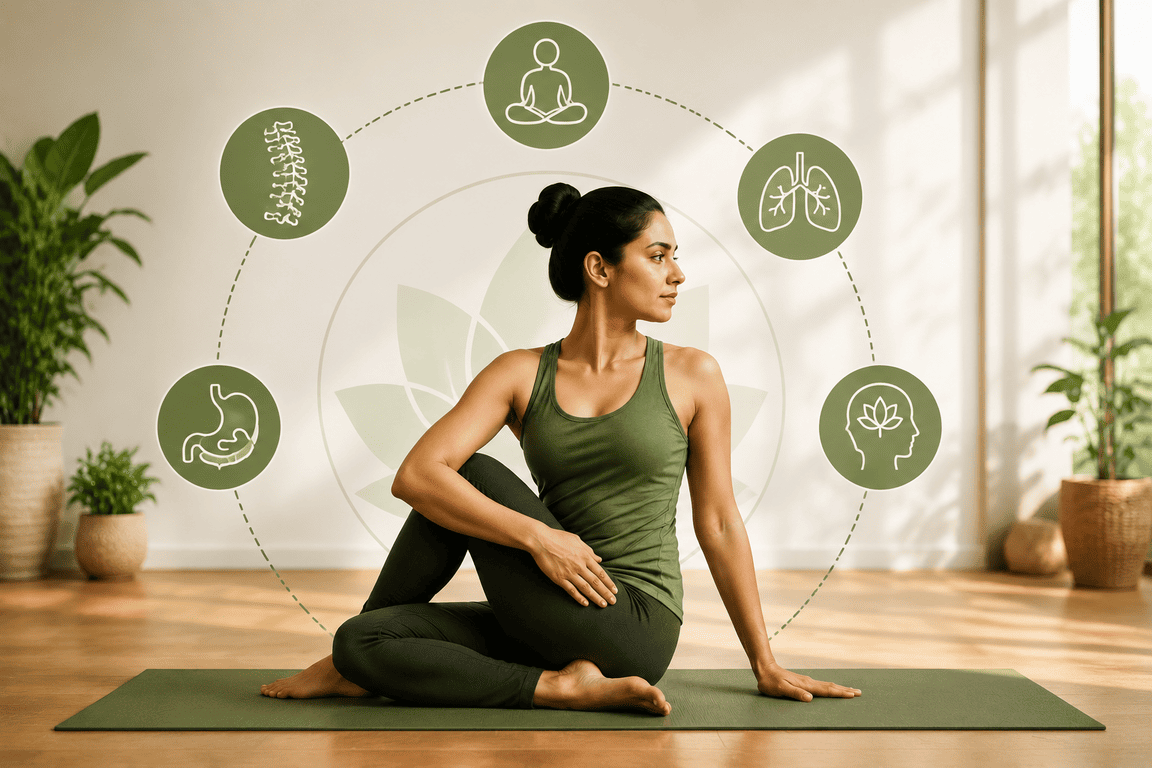
Proper technique is far more important than holding the pose for a long time.
Follow these simple steps:
Step 1
Sit on the floor with both legs stretched straight in front of you and keep your spine upright.
Step 2
Bend your right knee and place your right foot flat on the floor outside your left knee.
Step 3
Keep your left leg straight, or if comfortable, bend it slightly so your left heel rests near your right hip.
Step 4
Place your left hand on the outside of your right knee.
Step 5
Put your right hand behind your body with your palm resting on the floor close to your spine.
Step 6
Inhale deeply and lengthen your spine.
Step 7
Exhale slowly while twisting your torso to the right.
Step 8
Turn your head last and look over your right shoulder.
Step 9
Hold the pose for 15–30 seconds, breathing normally.
Step 10
Release slowly and repeat on the opposite side.
Practice 2–3 rounds on each side. As flexibility improves, you may hold the pose slightly longer, but never force the twist.
Popular Vakrasana Variations and Their Benefits
Once you're comfortable with the classic pose, you can explore these variations.
| Variation | How It's Different | Key Benefit |
|---|---|---|
| Meru Vakrasana | A deeper spinal twist with greater upper-back rotation | Improves spinal flexibility and shoulder mobility |
| Gatyatmak Meru Vakrasana | A dynamic version synchronized with breathing | Builds spinal strength and improves coordination |
| Uttana Vakrasana | Legs remain extended with a gentle forward twist | Stretches the hamstrings and lower back |
| Standing Vakrasana | Performed while standing | Improves balance, posture, and spinal mobility |
| Supta Vakrasana | A reclining spinal twist performed lying down | Ideal for beginners, seniors, and recovery after injury |
These variations all use the same basic twisting movement but suit different flexibility levels and fitness goals.
Vakrasana Benefits and Precautions
Although Vakrasana is generally safe, it's important to know when to modify or avoid the pose.
When Vakrasana Can Help
- Mild to moderate back stiffness
- Poor digestion
- Stress and tension
- Building core strength
- Improving posture
- Increasing spinal mobility
When You Should Avoid or Modify Vakrasana
Avoid or practice only under expert supervision if you have:
- Recent spinal surgery
- Slipped disc
- Severe sciatica
- Pregnancy (especially during the second and third trimesters)
- Recent abdominal surgery
- Severe arthritis affecting the knees or hips
If you have any existing medical condition, consult your doctor or a qualified yoga instructor before practicing.
Common Mistakes That Reduce the Benefits
Even though Vakrasana is simple, these common mistakes can reduce its effectiveness.
Rounding the Back
Always keep your spine tall before twisting.
Twisting the Neck First
Your torso should rotate first, and your head should turn last.
Holding Your Breath
Twist while exhaling and continue breathing normally throughout the pose.
Pulling Too Hard with the Arm
Your arm should support the twist—not force it.
Skipping the Warm-Up
Prepare your hips and spine with gentle stretches before attempting spinal twists.
Correcting these small mistakes can significantly improve your Vakrasana yoga benefits.
Making Vakrasana Part of Your Routine
Vakrasana delivers the best results when practiced consistently.
Those interested in the traditional aspects of yoga may also explore the 15 spiritual benefits of Yoga, where twisting poses are often associated with mental clarity and emotional balance.
If you prefer scientific evidence, research supporting the 12 benefits of Yoga backed by Science includes improvements in flexibility, reduced stress hormones, stronger core muscles, and better mobility, all of which align with the benefits of Vakrasana.
Whether you practice for five minutes daily or include it in a longer yoga session, the benefits of Vakrasana grow through consistency rather than intensity.
Frequently Asked Questions
Yes. Vakrasana is one of the easiest spinal twisting poses for beginners. Focus on maintaining a straight spine instead of twisting deeply. If needed, start with Supta Vakrasana, the reclining variation.
Practice 2–3 rounds on each side, once or twice daily for the best results.
Vakrasana strengthens the abdominal muscles and improves digestion, which may contribute to a more toned waist over time. However, it should be combined with regular exercise and a healthy diet for fat loss.
Both are seated spinal twists, but Ardha Matsyendrasana involves a deeper leg position and a stronger twist, making Vakrasana the better choice for beginners.
Most people can practice Vakrasana during menstruation, and some find it helps reduce lower back discomfort. However, if twisting feels uncomfortable, it's best to skip the pose and listen to your body.
Yes, practicing Vayu Mudra along with Vakrasana can complement your yoga routine. While Vakrasana helps improve spinal flexibility and digestion, Vayu Mudra benefits include reducing excess air (Vata) in the body, easing joint discomfort, and supporting better circulation. Together, they can promote overall physical balance and relaxation.