
If you have ever tried to sit still for meditation and ended up shifting every thirty seconds, you already know that your posture matters just as much as your breath. Meditative asanas are the seated poses that give your body a stable base so your mind can actually settle. They are not about touching your toes or building strength. They are about sitting in a way that lets you forget your body exists for a while.
In this guide, you will learn what meditative asanas are, the 5 meditative asanas worth learning first, their benefits, and how to pick the best asana for meditation based on your own flexibility
What Is Meditative Asanas, Really?
When people ask what is meditative asanas, the simplest answer is this: a meditative asana is any seated yoga posture designed to keep your spine upright, your hips grounded, and your body relaxed enough that you stop noticing it during meditation. Unlike active asanas that stretch or strengthen, these poses exist purely to support stillness.
You will usually see them described as sitting asanas for meditation because the entire point is to sit, breathe, and stay put for several minutes without discomfort pulling your attention away.
Importance of Meditative Asanas
The importance of meditative asanas comes down to one simple fact: your posture directly affects your ability to focus. A slouched spine restricts your breath. A leg that falls asleep pulls your attention straight out of meditation and into your knee. When you sit correctly, your breath flows easier, your spine stays supported without extra muscular effort, and your mind has fewer physical distractions competing for attention.
This is why yoga teachers spend so much time on seated alignment before ever mentioning breathing techniques. Get the base right, and everything else becomes easier.
Meditation Asanas Names: The 5 Best Poses to Learn
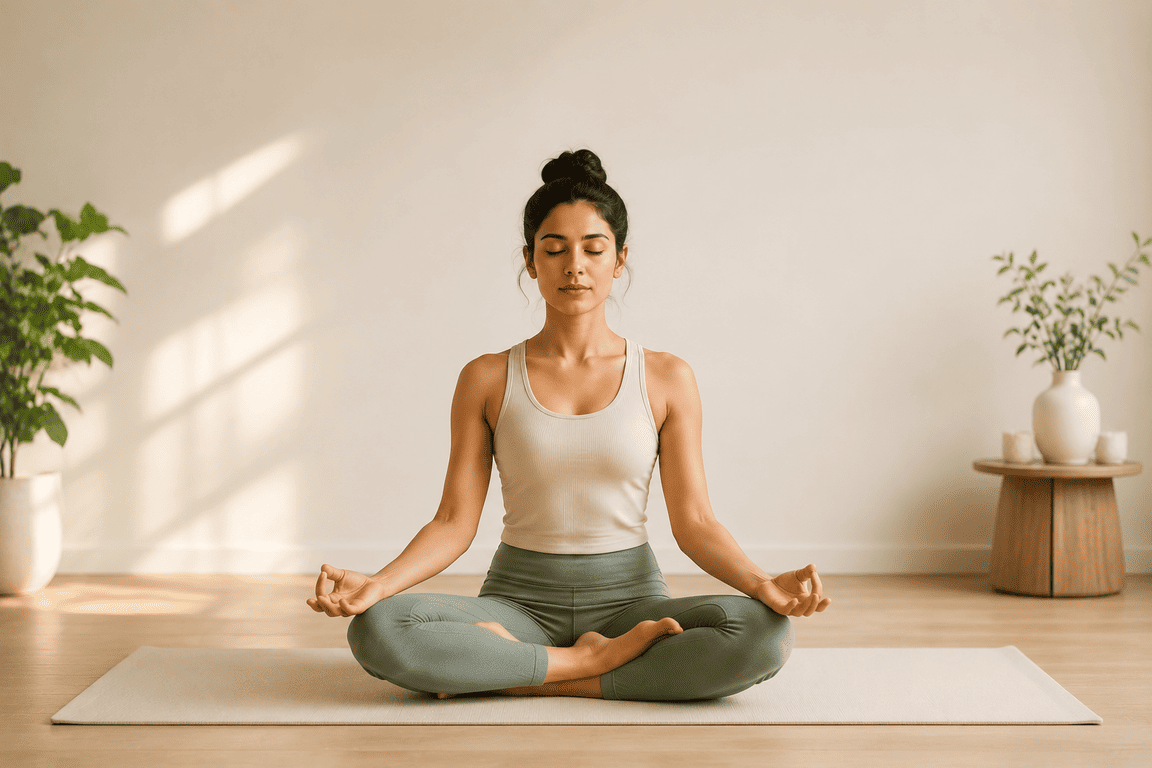
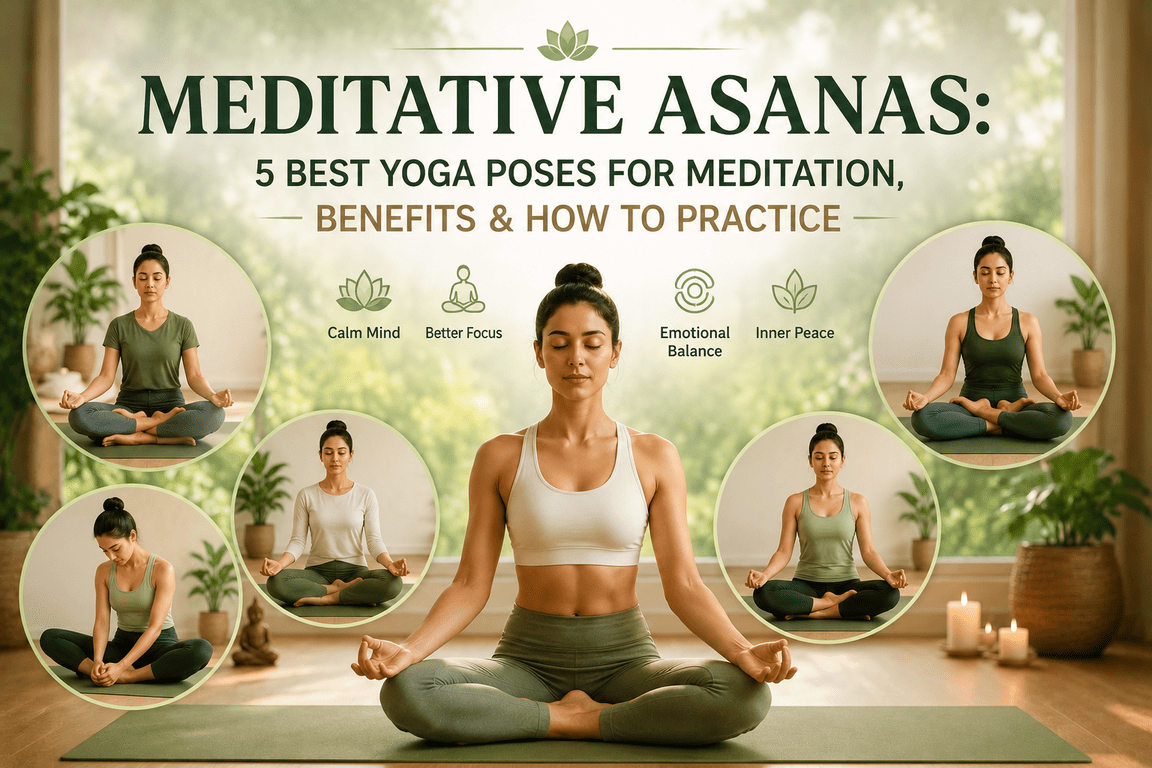
Here are the meditation asanas names most commonly taught for stillness practice, along with how to get into each one.
1. Sukhasana (Easy Pose)
Cross your shins loosely in front of you, let each foot rest under the opposite knee, and lengthen your spine. This is usually the first of the meditative asanas names taught to beginners because it asks for very little hip flexibility. If your knees are higher than your hips, sit on a folded blanket to tilt your pelvis forward slightly.
2. Ardha Padmasana (Half Lotus Pose)
Place one foot on the opposite thigh and tuck the other foot under the opposite thigh. This asana builds hip flexibility gradually and works well once Sukhasana starts feeling too easy to hold your attention.
3. Padmasana (Full Lotus Pose)
Both feet rest on the opposite thighs. This is one of the most recognized among the names of meditative asanas, prized for the natural lock it creates through the hips and lower spine. It takes time to build up to comfortably, so do not force it early on.
4. Vajrasana (Thunderbolt Pose)
Kneel and sit back on your heels with your spine straight. Unlike the others, this pose can be practiced right after a meal, which makes it a practical choice if you meditate in the evening.
5. Siddhasana (Accomplished Pose)
Place one heel against the perineum and the other foot on top, stacking the ankles. This pose is associated with deeper concentration in classical yoga texts and is often recommended once your hips and knees have opened up through regular practice.
| Asana | Difficulty | Best For | Suggested Duration |
|---|---|---|---|
| Sukhasana | Beginner | First-time meditators, stiff hips | 5 to 15 minutes |
| Ardha Padmasana | Beginner to Intermediate | Building hip flexibility | 10 to 20 minutes |
| Padmasana | Advanced | Experienced practitioners | 15 to 30 minutes |
| Vajrasana | Beginner | After meals, digestion-friendly meditation | 5 to 15 minutes |
| Siddhasana | Intermediate to Advanced | Deep, prolonged focus | 15 to 30 minutes |
Yoga Asanas for Meditation: Why Sitting Posture Changes Everything
Yoga asanas for meditation work because they solve a problem most people do not think about until they are already meditating: physical restlessness. Sitting cross-legged with a straight spine keeps your diaphragm free to move, your rib cage open, and your nervous system less likely to trigger the fidgeting that comes from an awkward position. It is a small mechanical detail that has an outsized effect on how long you can stay present.
Benefits of Meditative Asanas
The benefits of meditative asanas go beyond just sitting comfortably. Regular practice tends to bring:
- Better posture over time. Holding your spine upright daily trains the muscles that support it, so good posture starts feeling natural instead of effortful.
- Improved focus and mental clarity. A stable, comfortable seat removes physical distraction, which makes it easier to notice when your mind wanders and bring it back.
- Reduced stiffness in hips and knees. Poses like Ardha Padmasana and Padmasana gradually open the hip joints, which helps with everyday movement too.
- Calmer nervous system. Steady, upright sitting paired with slow breathing tends to shift your body out of a stressed state and into a more relaxed one.
- A consistent meditation habit. When your body is not fighting you, you are far more likely to actually sit down and practice each day.
These meditative asanas benefits compounds with consistency. A single session will not transform your flexibility or focus, but weeks of regular practice usually will.
How to Pick the Best Asana for Meditation
There is no single best asana for meditation that works for everyone. Your choice should depend on your current flexibility, how long you plan to sit, and whether you are meditating before or after eating.
- If your hips are tight, start with Sukhasana or Vajrasana.
- If you already practice yoga regularly, Ardha Padmasana or Siddhasana will likely feel accessible.
- If you want to meditate after dinner, Vajrasana is the most comfortable option since it does not strain a full stomach.
- If you are working toward longer sits of twenty minutes or more, Padmasana or Siddhasana offer the most stable base once your body is ready.
Complementary Practices Worth Knowing
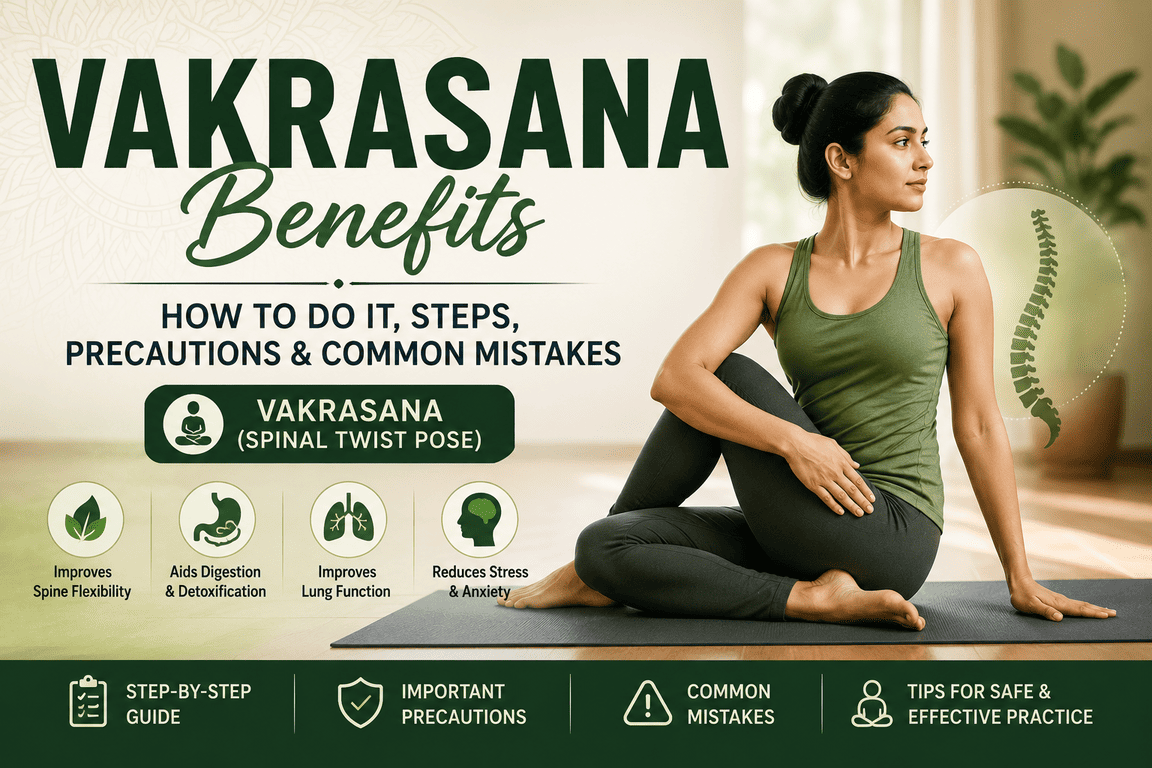
A few related yoga practices often come up alongside meditative asanas, and they are worth understanding even briefly. Vakrasana benefits your spine through a gentle seated twist that can be a useful warm up before sitting for meditation, since it loosens the lower back. Vayu mudra benefits include a simple hand gesture practice believed to support calmness during seated meditation, done by folding the index finger under the thumb. Kunjal kriya is a traditional cleansing technique some yoga practitioners use in the morning before asana practice, though it should only be learned under proper guidance. If you come across pranic healing techniques while researching energy based wellness practices, know that these are a separate, non-touch approach focused on the body's energy field rather than physical posture.
Conclusion
Meditative asanas are not about achieving a perfect pose. They are about finding a seated position that lets your body disappear from your attention so your mind can actually settle. Start with Sukhasana or Vajrasana if you are new to this, build up toward Ardha Padmasana and eventually Padmasana or Siddhasana as your hips open, and remember that consistency matters far more than which pose you choose on any given day.
Frequently Asked Questions
Sukhasana, or Easy Pose, is the most accessible starting point. It requires minimal hip flexibility and can be modified with a cushion if your knees are higher than your hips.
Start with five to ten minutes and gradually extend as your comfort improves. Most practitioners work up to fifteen to thirty minutes over several weeks.
Yes. If floor sitting causes pain, a chair with your feet flat and spine upright still supports focused meditation.
Vajrasana is a good option since it does not require crossing the legs and can even be practiced after meals.
Yes. Meditative asanas create a stable and comfortable sitting position that makes it easier to focus on your breath instead of racing thoughts. While they do not stop overthinking instantly, regular meditation practice in these poses can improve mindfulness, reduce mental clutter, and help you respond to thoughts more calmly over time.
Many people notice a sense of calm and better posture after their very first session. However, lasting benefits such as improved concentration, greater flexibility, and reduced stress usually develop through consistent practice over several weeks.
Avoid forcing yourself to stay in a painful position. Use a folded blanket, meditation cushion, or yoga block to support your hips and maintain a neutral spine. If discomfort continues, switch to a more suitable pose like Sukhasana or even meditate while sitting on a chair with your feet flat on the floor.
Yes. Meditative asanas complement an Ayurveda retreat by supporting relaxation, improving breath awareness, and encouraging mental balance. Combined with Ayurvedic therapies, mindful movement, and a healthy diet, these poses can enhance your overall wellness experience.
Absolutely. Meditative asanas are commonly included in Ayurveda retreats because they help prepare the body and mind for meditation, pranayama, and other holistic healing practices. The poses are usually adapted to your comfort level, making them suitable for both beginners and experienced practitioners.