Quick Answer Box
Essential pranayama for beginners includes five techniques practiced for 5-10 minutes daily in a comfortable seated position. They improve focus, lower stress, and build respiratory health. Start with diaphragmatic breathing and add one new technique every week.
5 Essential Pranayama Techniques for Beginners:
Diaphragmatic Breathing (Belly Breathing): Sit comfortably with one hand on your chest and one on your belly. Inhale through the nose, belly rises, chest stays still. Exhale slowly, belly falls. This is the foundation of all pranayama. Start here.
Nadi Shodhana (Alternate Nostril Breathing): Right thumb closes right nostril. Inhale through left nostril. Close left with ring finger. Exhale through right. Inhale through right. Exhale through left. One full round. Do 5-10 rounds. Balances both brain hemispheres. Reduces stress within minutes.
Bhramari (Bee Breath): Sit with straight spine. Inhale slowly. On exhale, make a soft humming sound in the throat. Feel the vibration in the skull. The humming directly calms the nervous system. Best for anxiety and before sleep.
Kapalabhati (Skull-Shining Breath): Sit upright. Exhale forcefully through the nose by pulling the belly toward the spine. Let the inhale happen passively. Repeat 20-30 times. Energising and purifying. Do not practice if pregnant or hypertensive.
Ujjayi (Ocean Breath): Inhale and exhale through the nose while slightly constricting the back of the throat. Breath sounds like soft ocean waves. Used during asana practice.
Guidelines for beginners:
- Posture: Sit upright on a cushion or chair with spine straight
- Duration: Start with 5 minutes. Increase gradually over weeks.
- Best time: Early morning on an empty stomach
- Safety: Avoid Kapalabhati if pregnant or if you have high blood pressure. If you feel lightheaded, return to normal breathing immediately.
Pranayama is the practice of breathing with intention. Within two minutes of slowing the breath down, the nervous system responds. Within two weeks of daily practice, sleep improves. This guide covers five techniques every beginner should learn, in the order they should be learned, and why each one works.
What Is Pranayama?
Pranayama is the systematic practice of breath regulation, the fourth of the 8 limbs of yoga as described by Patanjali in the Yoga Sutras. The word comes from two Sanskrit terms: prana (life force) and ayama (expansion or regulation).
A lot of beginners come in thinking pranayama is just deep breathing. It is quite different. Each technique has its own structure and produces a different effect. Bhramari calms the mind within minutes. Kapalabhati energises the body. Nadi Shodhana balances both. The reason any of this works is that the breath is the one bodily function that runs on its own but can also be consciously controlled. Most things that affect the nervous system, like medication or sleep, are indirect. The breath is direct. That is what makes pranayama worth learning properly.
The 5 Essential Pranayama Techniques: At a Glance
Here are the five techniques in this guide, in the order a beginner should learn them, with what each one is best used for.
| Technique | When to Learn | Duration | How It Feels | Best For |
|---|---|---|---|---|
| Diaphragmatic Breathing (Belly Breathing) | Week 1 starts here | 5 minutes morning | Belly rises on inhale, falls on exhale | Foundation for all other techniques |
| Nadi Shodhana (Alternate Nostril Breathing) | Week 2 | 5–10 minutes in the morning | Alternating nostrils | Stress, balance, focus |
| Bhramari (Bee Breath) | Week 2–3 | 5 minutes any time | Humming on exhale | Anxiety, sleep, calm mind |
| Kapalabhati (Skull-Shining Breath) | Week 3–4 | 3–5 minutes morning only | Forceful short exhales | Energy, mental clarity, digestion |
| Ujjayi (Ocean Breath) | Week 4+ | During asana practice | Ocean sound in throat | Focus during yoga, warm body |
Do not try all five at once. Start with technique one and move to the next only when the current one feels comfortable and natural.
The 5 Essential Pranayama Techniques for Beginners: Step by Step
1. Diaphragmatic Breathing: The Foundation
This is where everything starts. Before you learn any other pranayama, you need this one working properly, because every other technique depends on it.
How to do it:
- Sit or lie down. Get comfortable; first posture matters less than being relaxed.
- Put one hand on your chest, one on your belly.
- Breathe in through your nose. Your belly should push out. Your chest? Mostly still.
- Exhale slowly. Belly drops back down.
- Five to ten breaths are enough to start.
Why this actually does something: Your diaphragm sits right next to the vagus nerve: the nerve that tells your body it’s safe to relax. When you breathe into your belly instead of your chest, you’re pressing on that nerve directly. That’s not a metaphor. It’s why your heart rate drops after two or three rounds even when your brain is still running fast.
Use it: Every morning, before you try anything else. And honestly, any time during the day when things start feeling tight.
2. Nadi Shodhana: Alternate Nostril Breathing
This one looks complicated the first time you see someone do it. It isn’t. Give it two sessions and your hands know what to do without thinking.
How to do it:
- Sit up straight, this one needs your spine open.
- Left hand rests on your knee. Right hand comes up to your nose.
- Block your right nostril with your right thumb. Breathe in slowly through the left.
- Close both nostrils. Brief pause.
- Open the right. Breathe all the way out.
- Now inhale through the right.
- Close both. Pause.
- Open the left. Exhale fully.
- That’s one round. Do five to ten.
Why this actually does something: Your left and right nostrils don’t do the same job, they connect to different parts of your nervous system. When one side is dominant, things feel off. Alternating between them is a way of manually resetting that balance. Research has measured drops in cortisol after just five minutes of this practice.
Use it: Morning, before sitting meditation, or when your head feels like it’s going in six directions at once.
3. Bhramari: Bee Breath
Strange-looking. Incredibly effective. This is the one people are most sceptical about until they try it, then they do it every night.
How to do it:
- Close your eyes. Sit however is comfortable.
- Press your thumbs gently into your ears to block outside sound. (Some teachers add fingers over the eyes, skip that for now.)
- Full breath in through the nose.
- As you breathe out, hum. Steady, low, continuous like a bee.
- You’ll feel it in your throat, your jaw, maybe your forehead.
- Five to seven rounds.
Why this actually does something: The humming vibration moves through your throat and skull and directly stimulates the vagus nerve. It’s not subtle, your body responds to vibration at a physical level before your mind processes anything. That’s why the effect kicks in almost immediately. Most people feel a shift by the third breath. That kind of immediate nervous system response is part of why the benefits of yoga extend well beyond the physical.
Use it: Before sleep. During anxiety, even the middle-of-the-night kind. When your mind won’t stop moving.
4. Kapalabhati: Skull-Shining Breath
Worth knowing from the start: this is technically a kriya, a cleansing technique, not just a breathing exercise. Treating it only as breathwork misses the point of it.
How to do it:
- Sit with your spine straight.
- Take a normal breath in.
- Exhale hard and sharp through your nose, pull your belly in fast as you do.
- Let the inhale come back on its own. Don’t pull it in. It just happens.
- Sharp exhale, passive inhale. That’s the rhythm.
- Start with 20 rounds. Build from there over weeks, not days.
Why this actually does something: The fast diaphragm movement does three things at once, it stimulates the abdominal organs, pushes circulation, and builds internal heat. This is not a calming practice. It’s activating. People sometimes confuse that with something being wrong. Nothing is wrong, that’s what it’s supposed to do.
Use it: Morning only. Not in the evening, not before bed. And not if you’re pregnant, have high blood pressure, heart issues, or any abdominal condition. This one has real contraindications worth respecting.
5. Ujjayi: Ocean Breath
This breath is designed for movement. That distinction matters, beginners sometimes try using Ujjayi as a seated practice on its own, and it doesn’t quite land the same way.
How to do it:
- Breathe in through your nose.
- On the exhale, narrow the back of your throat slightly, like you’re trying to fog a mirror but your mouth is shut.
- You’ll hear a soft rushing sound. A little like the ocean, a little like Darth Vader. Both comparisons are accurate.
- Apply the same constriction on the inhale too.
- Match the pace of your breath to whatever movement you’re doing.
Why this actually does something: The narrowing in the throat slows the breath down and creates mild internal pressure. That pressure helps hold heat in the body during practice and gives your mind something to follow when movement gets challenging. It’s harder to zone out when you can hear your own breath.
Use it: During asana. Let your practice tell you when to pick it up and when to ease off. As a beginner, this one is for movement, not for sitting still.
How to Set Up Your Pranayama Practice: Practical Guidelines
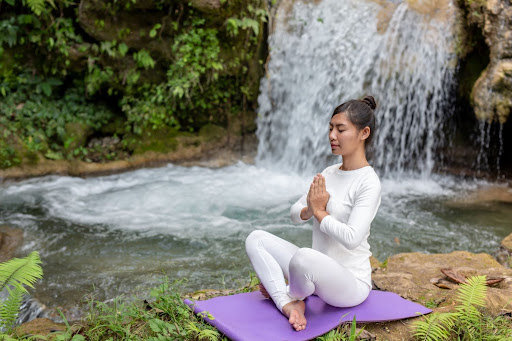
Posture Sit upright on a cushion, folded blanket, or chair. A compressed spine actually restricts how far your diaphragm can move, which limits every technique you try. You don’t need to sit in lotus or any specific yoga position, any comfortable upright position works fine.
Best time Early morning on an empty stomach is the classic instruction, and it’s the right one. The mind is clearer before the day gets going and digestion won’t interfere with your breath. Evening practice is also fine for the calming techniques, just keep Kapalabhati strictly in the morning.
Duration Start with five minutes of one technique. Add roughly one minute per week, not faster. The nervous system needs time to adjust to this kind of work and pushing duration too quickly often creates more agitation, not less.
Environment A well-ventilated room, out of direct sunlight. Practising in the same place at the same time each day builds the habit faster than any amount of motivation will.
Safety A few specific things worth knowing before you start:
- Avoid Kapalabhati if you are pregnant, have high blood pressure, a hernia, or epilepsy
- Avoid breath retention if you have any heart condition, practise without holds until you’ve worked with a teacher
- If you feel lightheaded at any point, stop immediately and return to normal breathing
- Advanced techniques should be learned from a qualified teacher, not from YouTube alone.
Common Mistakes Beginners Make in Pranayama: and How to Avoid Them
Doing too much too soon
Pick one technique and do it daily for a week. Five techniques done once each is worth nothing. One technique done every morning for seven days starts to change something.
Eating before practice
Morning practice before breakfast is the simplest fix. If that is not possible, wait at least two hours after a meal. With Kapalabhati, a full stomach makes the whole thing miserable.
Forcing the breath in Kapalabhati
The exhale needs force, not violence. If the shoulders are tensing or there is any discomfort in the chest or head, the effort is too much. Find a pace that feels strong but not strained.
Slouching
A collapsed spine cuts the breath short. You do not need a perfect posture but the back needs to be upright. Sitting against a wall works fine.
Quitting too early
Three or four sessions is not enough time to feel anything consistent. Give each technique two full weeks of daily practice before deciding whether it is working or not.
How Quickly Does Pranayama Work?
This is probably the most common question beginners have and nobody answers it with any specifics. Here is an honest breakdown.
After 1 session: Nadi Shodhana brings a noticeable calm within five minutes. Bhramari works even faster, the humming vibration hits the nervous system almost immediately.
After 1 week: Sleep starts improving, particularly if you are practicing Bhramari or Nadi Shodhana in the evening. The morning practice starts to feel less like effort and more like habit.
After 2 weeks: Energy levels in the morning feel different with regular Kapalabhati. Focus through the day is noticeably steadier.
After 1 month: The stress response changes. Things that used to spike anxiety feel more manageable. Concentration improves in a way that carries into work and daily tasks.
After 3 months: Breathing efficiency improves measurably. Some people notice their resting heart rate has dropped. The practice at this point feels less like something you do and more like something you need, which is what yoga in daily life does when it actually takes hold.
All of this assumes daily practice of five to ten minutes. Three times a week produces slower results. Once a week produces very little. The only thing that actually matters here is consistency.
Taking Your Pranayama Practice Further
Start at home
The five techniques in this guide are enough for a complete daily practice. Ten minutes every morning is all it takes to start. No equipment, no prior experience, nothing else required.
Learn with a teacher
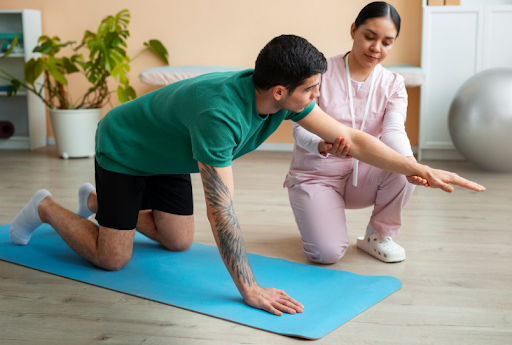
Home practice has limits. When you are learning from a screen, nobody can tell you that your belly is not actually moving or that you are tensing your shoulders without realising it. A teacher can see what you cannot. Even a week or two in a structured setting changes the practice in ways that are hard to get on your own. Yoga classes in Rishikesh are built around exactly this kind of daily immersive instruction.
Go deeper into the full system
The five techniques here are the starting point. Classical pranayama goes much further, including breath retention practices (kumbhaka) that are better learned in person under proper guidance rather than from a guide online.
More to Read
FAQs About Pranayama for Beginners
Start with five minutes of just one technique. Not five techniques, one. Most people think more is better and end up doing nothing after a week because it felt like too much. Five minutes every morning is genuinely enough to start seeing something change.
You do not need any yoga experience at all. If sitting cross legged on the floor is uncomfortable, a chair works just as well. The breath does not care how flexible you are.
Bhramari tends to work fastest because the humming vibration hits the nervous system almost immediately. Practice it for five minutes before bed with a long slow exhale. Nadi Shodhana is another good option if Bhramari feels a bit odd at first, which it does for some people.
Most techniques are fine for healthy adults. Kapalabhati is the one that needs caution, particularly if you are pregnant, have high blood pressure, epilepsy or a hernia. Breath retention practices are a different story and really should be learned with a teacher rather than figured out from a guide. When in doubt, check with a doctor before starting.
Deep breathing is just slowing down without much structure. Pranayama uses a specific ratio of inhale, hold, and exhale and that structure is what produces consistent, targeted effects in the body. The difference shows up clearly after a few weeks of practice when you compare how you feel after Bhramari versus just taking a few slow breaths.
The Bottom Line
Most people who try pranayama give up in the first week, usually because they started with too many techniques or expected something dramatic too soon. The practice does not work that way.
Pick one technique from this guide. Do it for five minutes every morning for two weeks. That is the whole instruction. What happens after two weeks tends to answer every question about whether it is worth continuing.
The five techniques here cover everything a beginner needs, not just to start but to build a complete daily practice that holds up long term. What changes over months is not the techniques but how deeply you can actually pay attention during them.
If you want to learn pranayama properly with teachers who have practiced it for decades, Yog School India runs beginner programmes every month that include pranayama taught daily from the ground up.